Publications

TASMANIA’S NATURAL FLORA
This excellent book covers over 700 species of Tasmanian flora - mostly flowering plants. It also includes the Tasmanian conifers and members of the lily and iris families. Orchids, grasses, ferns, mosses and their allies are not included. Each species is described in layman terms covering: size, shape, leaf and flower forms, flowering time, fruit form, habitat and distribution, and cultivation. It is an ideal reference book for anyone interested in Tasmanian flora.
Copies are available from bookshops or through APST Southern Group’s publication officer at tasnatflora@gmail.com
Plant Identikits
These are a series of booklets which are pocket sized and are an aid to the field identification of Tasmanian plants. The text includes distinguishing features, description, flowering period, distribution and a sample locality, cultivation notes, and related species. They are accurately drawn and painted by APST members. Titles include Alpine Plants of Tasmania, Coastal Plants of Tasmania, Common Orchids of Tasmania, Rainforest Plants of Tasmania and Woodland Wildflowers of Tasmania
Identikits are available from bookshops or through APST Southern Group’s publication officer at tasnatflora@gmail.com

Coastal Plants of Tasmania
This booklet covers over 50 coastal area species, some of which are endemic to Tasmania and a few others introduced to Australia.

Woodland Wildflowers of Tasmania
This booklet covers over 50 Tasmanian woodland species, several of which are endemic to Tasmania.

Alpine Wildflowers
This booklet covers over 50 high country species, the majority of which are endemic to Tasmania.

Rainforest Plants of Tasmania
This booklet covers over 50 Tasmanian temperate rainforest species, nearly half of which are endemic to Tasmania.

Common Orchids of Tasmania
This booklet covers over 70 orchid species, many of which are endemic to Tasmania. It also provides location where they may be found when conditions are right.

Grow Local Guide
Available from Southern Councils
OTHER PUBLICATIONS FOCUSSING ON TASMANIA

Wattles of Tasmania
Marion Simmons OAM
Published in 2009, this small book is a compilation of the 20 Tasmanian Wattle species that Marion Simmons had previously described and illustrated in her definitive Acacias of Australia, Volume 1 (first published 1981). This book and its pair, Volume 2 cover 300 of the over 1,000 Australian Wattle species identified and described to date. The current book is an excellent guide to identifying and growing Tasmanian Wattles with each of the 20 species accurately illustrated with a black and white line drawing on the right hand page and fully described on the opposite page. Additional information is provided on the flammability, propagation by seed and cuttings, and growing in containers. Four mainland wattle species that are potential weed species have also been illustrated and described with warnings not to grow near bushland or forestry areas.
Self-published, this excellent reference booklet is available through online stores.
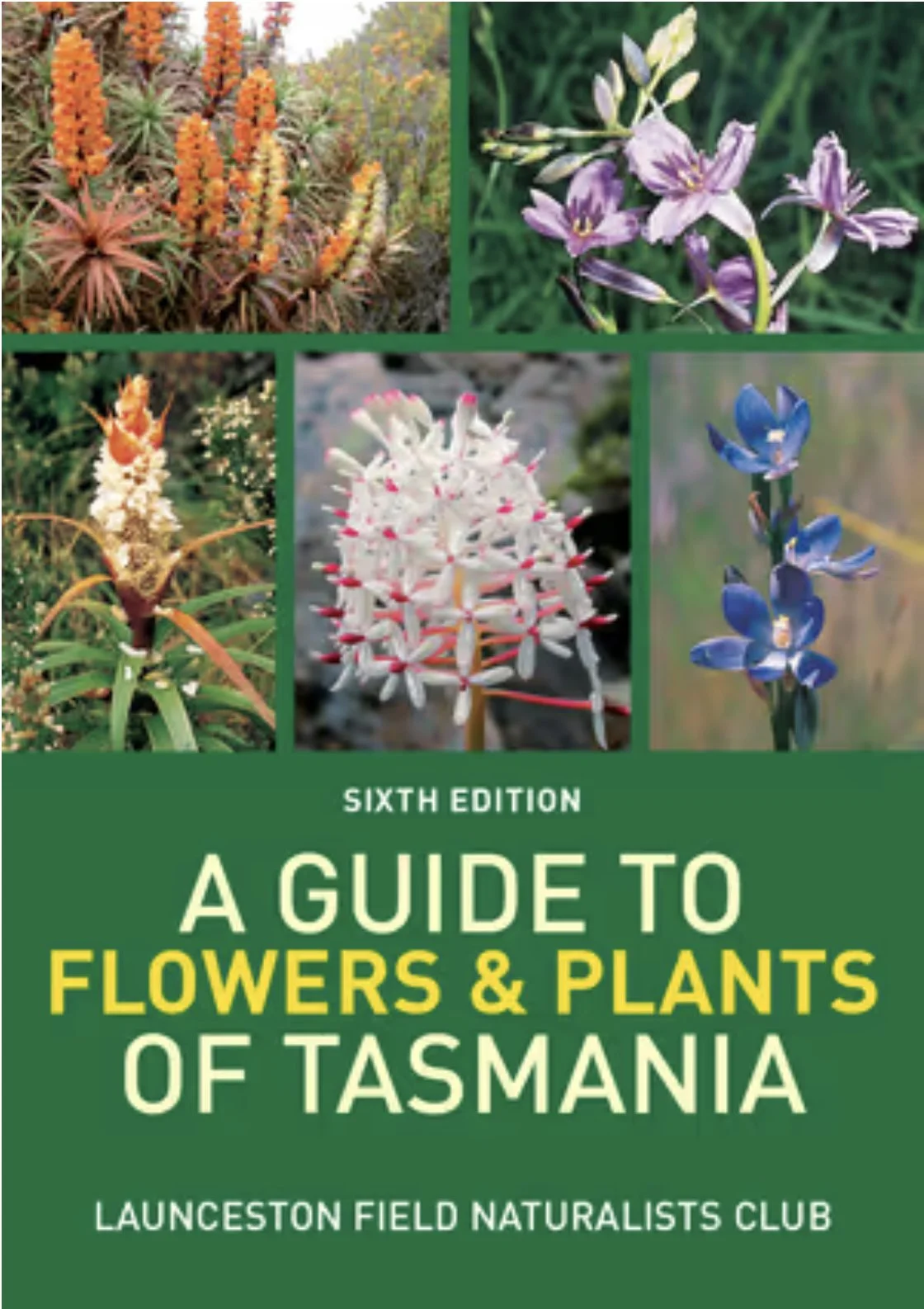
A Guide to Flowers & Plants of Tasmania
Launceston Field Naturalists Club
Guide to Flowers and Plants of Tasmania has been a mainstay for people interested in identifying Tasmanian plants. First published in the 1970’s, to quote the Introduction, “It is impossible to feature all the flowering plants, so a representative sample of those easily seen has been chosen. Many are common and widespread, others are significant parts of the Tasmanian flora, either confined to Tasmania or examples of genera more richly represented in Tasmania than in other states.”
Published and sold by the Launceston Field Naturalists Club Inc. by emailing secretary@lfnc.org.au.
Copies are also available at bookshops throughout the state.
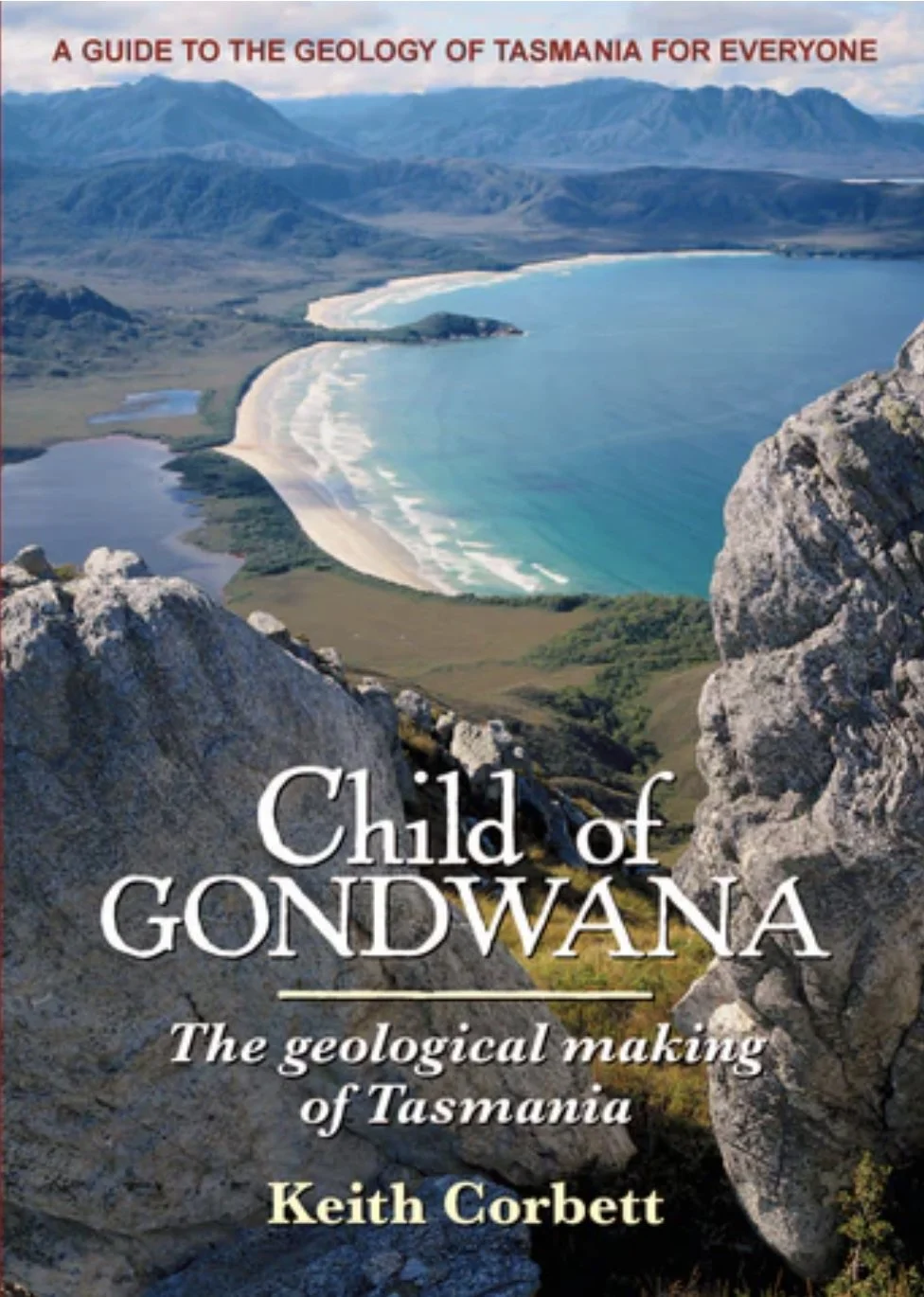
Child of Gondwana
The geological making of Tasmania
Dr Keith Corbett (APST member)
A guide to the geology of Tasmania for everyone
From our beginnings as part of North America to our birth during the break-up of the supercontinent Gondwana, through the Ice Age which sculpted our mountains and lakes, this beautifully illustrated book explains what’s behind our landscapes and scenery. See why and how continents move, what makes us different from the other states, how kunanyi / Mt Wellington was made, why eastern Tasmania is so different from the west, what makes our mountains and the ‘great unconformity’, what happened in the search for oil. Tasmania has a wonderful diversity of rocks and is a veritable textbook of geological time. This book helps us to understand and appreciate our deep history.
‘…a rare blend of comfortable reading and accurate scientific information. This is a book which all Tasmanians should read.’ ~ Ken Morrison

A Cradle Mountain Companion
Our prolific author member, Dick Burns, has produced Geology & Landforms of Cradle Mountain: A Cradle Mountain Companion, a companion to his earlier Exploring the Flora of Cradle Mountain Day Walk Areas (out of print).
The book covers the geological formation of Cradle Mountain, from an accessible geology primer through to the folding and faulting of the rock beds. Richly and beautifully illustrated throughout.
It closes with an excellent section on the geology along the popular walking tracks.
Available from bookshops.

A Guide to the Flora of Freycinet National Park
Identikit - A Guide to the Flora of Freycinet National Park, is the second of a series of pocket size identikit booklets written by Dick Burns of the APST North West Group, covering the significant and diverse flora of some of Tasmania’s National Parks. This booklet covers over 100 species found in the Freycinet National Park and most are illustrated with excellent photos accompanied by simple descriptions and locations in the Park.
Copies are available from bookshops and the Freycinet Park Visitor Centre.