
Pelverata Falls
May 2025
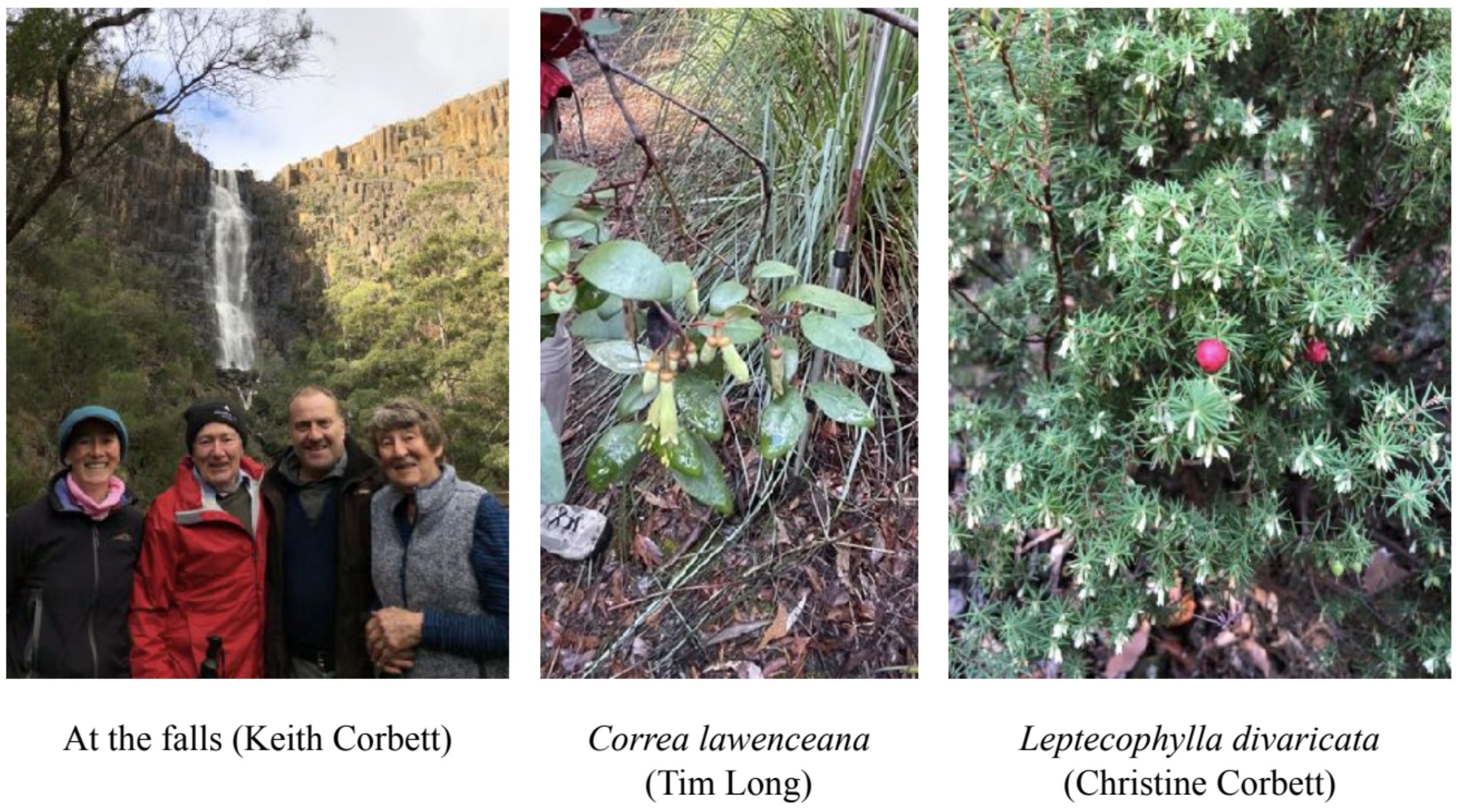
On Sunday 25th May 2025 we met at the Sandfly Memorial Ground at 9.30am. Some 50mm+ of rain in the preceding 30 hours or so had cleared to a lovely day. Up and over the Kaoota Hill and down to Pelverata to the start of the walk, a bit after 10.
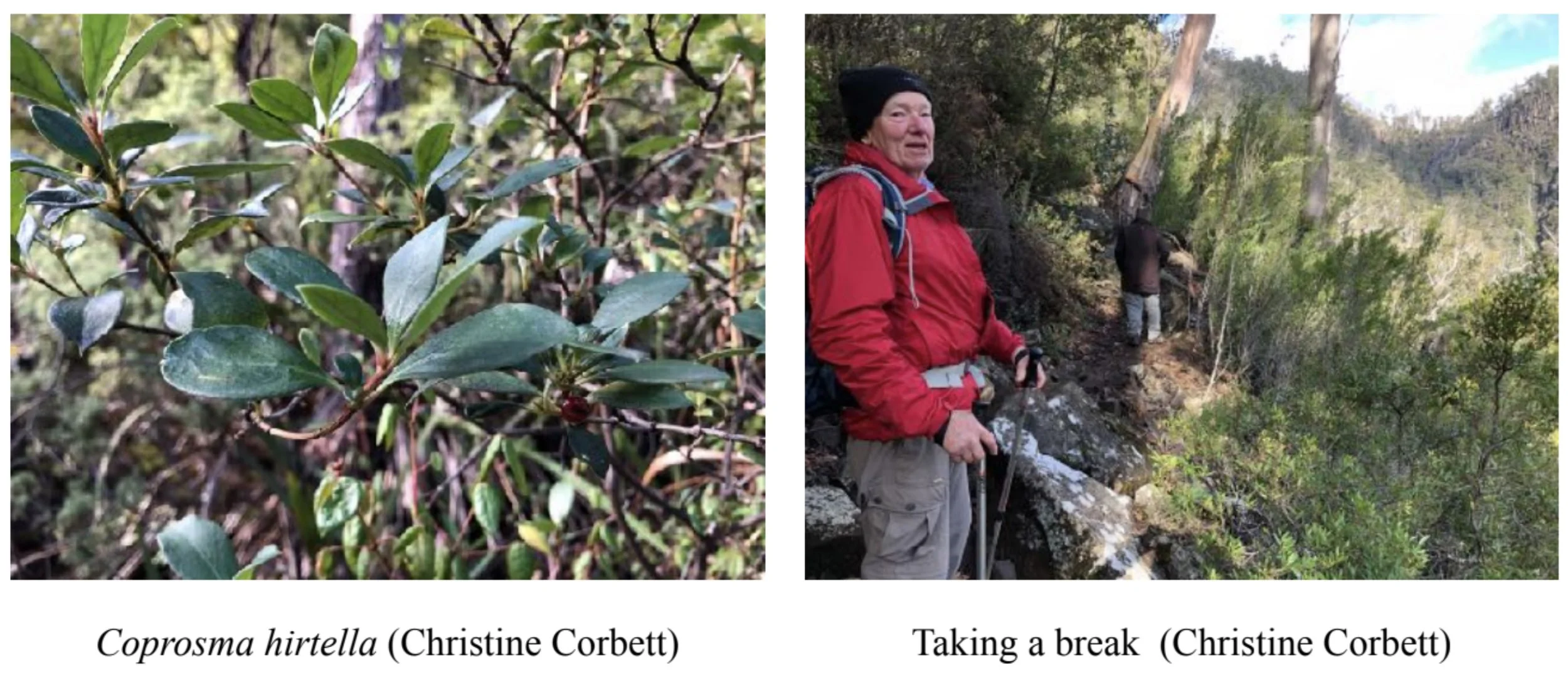
At a leisurely pace, through pleasant bushland, stopping often to examine and identify the varied flora, we started to ascend the track (returning, we commented at the occasional steepness of the descent which we hadn’t noticed on the way up, being engrossed in the exploration). Yellow wattle birds were heard and Green Rosellas seen.
We speculated at times on the fire history of the area – some pre- 67 fire remnants with complex canopies were evident, otherwise the forest was mainly populated by younger trees of various ages,with some fire scarring leading to a tentative conclusion that fire had visited parts of the forest on at least a couple of occasions since that Black Tuesday. There were also many examples of blackened stumps, a legacy of the old logging days, still with the axemen’s divots from their standing planks. Tony explained that the planks had a steel ‘toe’ fitted at the end, with an upward- pointed projection which held the plank in place.
Further along, the track sidled along a scree slope of small dolerite boulders, somewhat loose underfoot, forming the northern side of the huge valley. The geologist explained that the scree was due to normal break-down and weathering processes, rather than to any glacial action. We stopped for lunch at the beginning of the cliffy section, where there is a view of the distant Samson Falls to the south-east, with white water smeared over steep bare dolerite surrounded by dolerite columns. The last 200m of the track was steeper and rougher, before arrival at the observation platform. Here, we could behold the full glory of Pelverata Falls, as the rivulet, in fullish flow after the rain, crashes over columnar dolerite in spectacular fashion. We estimated the flow to be at least 2000L/sec, 120kL/minute.
We arrived back at the start about 2:30pm, after an exhilarating and enjoyable walk. Thank you, Christine!
Some of the interesting flora seen along the way included:
Daviesia ulicifolia (Native Gorse)
Monotoca glauca (GoldeyWood)
Acacia leprosa (Varnished Wattle)
Nematolepis squamea (Satinwood)
Olearia viscosa (Viscid Daisy Bush)
Notelaea ligustrina (Native Olive)
Lomatia tinctoria (Guitar Plant)
Epacris impressa (Common Heath)
Hibbertia sericea (Silky Guinea Flower)
Leptospermum scoparium (Tea Tree)
Veronica formosa (Speedwell Bush)
Pultenaea daphnoides (Large Leaved Bush Pea)
Five eucalypts were noted (E. obliqua, delegatensis, globulus, viminalis, amygdalina).
We arrived back at the start about 2:30pm, after an exhilarating and enjoyable walk. Thank you, Christine!